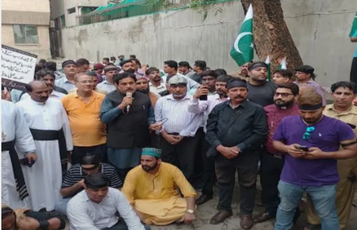
Lahore, August 10, 2024 – The upcoming Minority Rights March, planned for August 11, has become a flashpoint of tension and controversy across Pakistan. The march, which aims to highlight the struggles and injustices faced by religious minorities in the country, has been met with increasing threats from Islamic groups, raising concerns over the safety and rights of minority communities.
In recent weeks, the organizers of the march have reported a surge in pressure from various religious factions, particularly as the event draws nearer. These groups, notably the Tehreek-e-Labbaik Pakistan (TLP), have openly opposed the marches, submitting formal requests to local authorities to ban the demonstrations. In a letter to the Deputy Commissioner of Islamabad, the TLP’s Naib Nazim-e-Ala for Islamabad warned of counter-protests wherever the Minority Rights March occurs, holding local administrators accountable for any resulting unrest. The letter ominously hinted at potential violence, stating, “This could lead to unpleasant events.”
The march is set to take place in major cities, including Lahore, Karachi, and Islamabad, with the primary gathering at Frere Hall in Karachi. Despite the initial revocation of permission, persistent efforts by minority leaders, including multiple meetings with the Mayor of Karachi and the Commissioner, led to the reissuance of the permit. Pastor Shafique, speaking to the Pak Christian News (PCN), confirmed that the march would proceed as planned at 3:00 PM on August 11, with full security assurances from the government.
The decision to allow the march came after extensive discussions with high-level officials, including representatives from intelligence agencies like the ISI. These agencies clarified that their concerns were purely security-related, not objections to the minorities’ demands. A letter from the Home Department subsequently affirmed that no restrictions were imposed on the march, and preparations are now in full swing.
Despite the threats, minority leaders remain determined to proceed with the march, viewing it as a critical step toward securing their rights and raising awareness about the discrimination they face. Dr. Adil Ghouri, Chairman of Masihi Tehreek-e-Beadari, has been vocal about the growing threats. He recently took to social media to condemn the pressure from religious groups, stressing the need for tolerance and adherence to the vision of Pakistan’s founder, Quaid-e-Azam Muhammad Ali Jinnah, who advocated for the protection of minority rights.
In Karachi, Pastor Ghazala Shafiq has called on the public to join the march at Frere Hall, framing it as a stand against the various injustices faced by minorities, including the Jaranwala incident, forced conversions of minor girls, and unequal access to education and business opportunities. She emphasized the march as a symbolic resistance against growing intolerance and the increasing attacks on minority properties and places of worship.
The Minority Rights March in Karachi is not the only event planned for August 11. In Islamabad, Akmal Bhatt, Chairman of the Minority Alliance Pakistan (MAP), announced a National Conference focused on “The Protection of Minorities and the Role of Political Parties.” This event, to be held at a local hotel, aims to engage political leaders in a dialogue about the ongoing persecution of minorities.
Meanwhile, in Lahore, Samson Salamat, Chairman of Rawadari Tehreek Pakistan, has declared a hunger strike in front of the Punjab Assembly on August 10 and 11. His protest is intended to draw attention to the dire situation facing minorities in Pakistan and to urge the government to take concrete steps to protect their rights.
As Minority Rights Day approaches, the situation in Pakistan remains fraught with tension. The government’s response to the planned marches and protests will be closely watched, as it grapples with the challenge of balancing the right to peaceful protest with the demands of powerful religious groups. The outcome of these events could have a profound impact on the future of minority rights and religious tolerance in Pakistan, setting the stage for either greater inclusivity or deepening divisions.